
The most effective infection control training for long-term care facilities uses hands-on, visual demonstrations that make invisible contamination visible — rather than lectures or slide decks alone. GloGerm gel, powder, and UV light let staff see exactly where germs spread during routine care, creating an immediate, personal understanding that translates into lasting behaviour change. When a personal support worker sees fluorescent traces on a resident's bed rail, call bell, and water cup after performing routine care, the lesson sticks.
This page is part of the How to Improve Hand Hygiene Compliance in Hospitals guide.
Why is infection control different in long-term care?
Long-term care facilities face infection control challenges that are fundamentally different from hospitals. Residents live in the facility for months or years. Staff provide intimate, hands-on care multiple times per day. Shared common areas bring residents together for meals, activities, and socializing. And the population is among the most vulnerable to infection.
These realities make infection control training not just important, but essential. And they make traditional lecture-based training inadequate. Staff need to see the consequences of lapses in technique — not hear about them in a meeting room.
- High-touch, personal care: Bathing, dressing, feeding, and repositioning residents involves constant hand-to-person contact throughout every shift
- Shared living spaces: Dining rooms, activity areas, and lounges create opportunities for cross-contamination between residents who may have very different health profiles
- Staff turnover: Many long-term care facilities experience significant staff rotation, meaning new employees frequently need onboarding in infection control protocols
- Cognitive barriers: Residents with dementia or cognitive impairment may not be able to follow hand hygiene protocols themselves, placing the full burden on care staff
- Regulatory requirements: Provincial and federal regulations require documented infection control training, and inspectors look for evidence that training is effective, not just completed
How does GloGerm change infection control training?
A GloGerm demonstration does something that no slide deck or policy document can accomplish: it makes the invisible visible. When a personal support worker sees fluorescent traces on a resident's bed rail, call bell, and water cup after performing routine care, the lesson is immediate and personal. They do not need to be convinced that cross-contamination is real — they can see it.
Facilities that incorporate GloGerm into their training programs consistently report that staff take hand hygiene more seriously after the demonstration. The visual evidence creates an emotional response that translates into lasting behaviour change.
How do you run an infection control training session in long-term care?
Here is a proven format that works well in long-term care settings:
- Introduction (5 minutes): Briefly explain what GloGerm is and how the session will work. Keep it simple — avoid jargon and lengthy presentations
- Hand hygiene baseline (10 minutes): Apply GloGerm Gel to each participant's hands. Have them wash using their normal technique, then check under UV light. Document the results
- Technique instruction (10 minutes): Teach or review the WHO handwashing technique. Show our WHO handwashing video if a screen is available
- Second wash and compare (10 minutes): Reapply GloGerm, have staff wash using the proper technique, and check again. The improvement is always visible and motivating
- Cross-contamination demonstration (15 minutes): Apply GloGerm to a simulated patient or mannequin. Have one staff member perform routine care tasks (repositioning, checking vitals, adjusting bedding). Use UV light to reveal every surface that was contaminated. This is typically the most impactful part of the session
- Surface cleaning audit (10 minutes): Apply Surface Cleaning Detection Gel to high-touch surfaces. Have housekeeping staff clean as usual, then inspect under UV. Discuss areas that were missed
- Discussion and commitment (10 minutes): Facilitate a brief conversation about what participants learned and what they will do differently
What equipment do you need for long-term care infection control training?
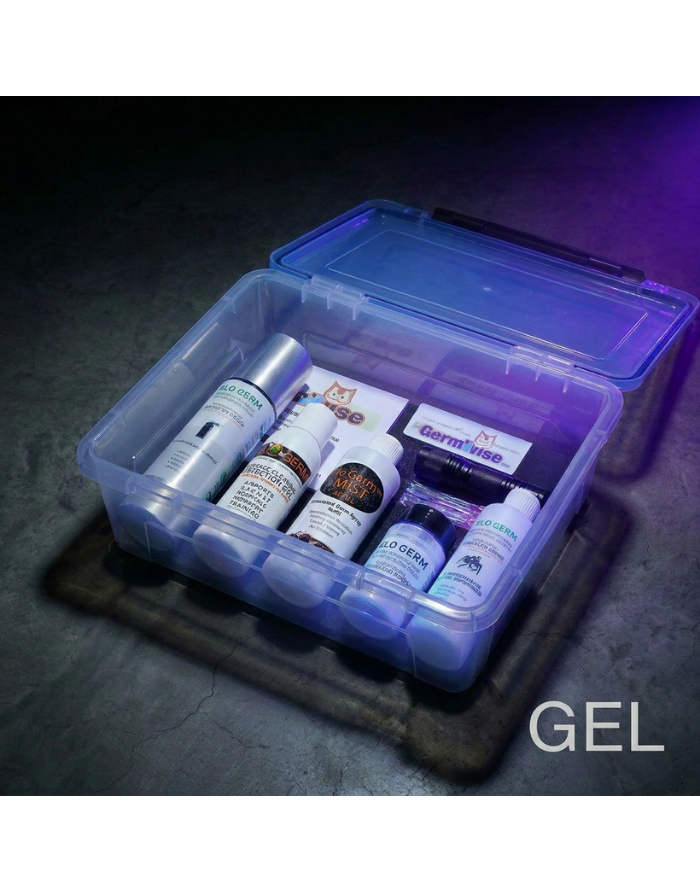
The HAZMAT Kit is our most popular choice for long-term care facilities because it includes everything needed for comprehensive training in a single hard plastic carry case:
- GloGerm Gel and Oil for hand hygiene demonstrations
- GloGerm Powder for surface contamination tracking
- Surface Cleaning Detection Gel for cleaning audits
- GloGerm MIST for airborne particle demonstrations
- UV flashlight for inspection
- Trainer's manual with session guides
For facilities with multiple units or locations, bulk ordering ensures every site has its own kit available for ongoing training without scheduling conflicts.
How do you make infection control training stick long-term?
One training session changes awareness. Repeated sessions change culture. The most effective long-term care facilities run GloGerm demonstrations quarterly — during new staff orientation, as part of annual competency reviews, and during outbreak response. The supplies are reusable and cost-effective, making regular training financially practical.
Equip your care facility
The HAZMAT Kit includes everything for hand hygiene, surface cleaning, and airborne contamination training.
Shop HAZMAT Kit Bulk Orders