
Teaching Handwashing to Kids: Age-Appropriate Activities for K–6
Children touch everything. Desks, doorknobs, each other's hands, their own faces — all day long, without a second thought. Teaching them proper handwashing is one of the single most effective ways to reduce illness in schools, but telling a six-year-old to wash their hands for twenty seconds rarely sticks. You have to show them why it matters.
That is where GloGerm transforms a routine hygiene lesson into something kids remember for years.
Why GloGerm Works with Kids
Children are visual learners. Abstract concepts like bacteria and viruses mean very little to them, but when they can see bright fluorescent traces glowing on their hands under a UV light, the lesson becomes concrete and unforgettable. The reaction is always the same — wide eyes, gasps, and an immediate desire to wash better.
GloGerm is completely safe for children. The gel and oil formulas are non-toxic, non-staining, and wash off easily with soap and water. They have been used in schools across North America for decades.
Activities by Grade Level
Kindergarten to Grade 2 (Ages 5–7)
At this age, keep it simple and focused on the wow factor.
- The Glitter Handshake: Apply GloGerm Gel to one student's hands. Have them shake hands with three classmates, who then shake hands with three more. Turn on the UV light and show how far the "germs" traveled. This teaches the concept of germ transfer through a chain of contact
- Wash and Check: Have students apply GloGerm, then wash their hands as they normally would. Check under UV to see what they missed. Most young children skip their thumbs, fingertips, and the backs of their hands entirely
- Sing Along Wash: Pair the UV check with a handwashing song to help kids learn the right duration. After singing through the full technique, check again — the improvement is always dramatic
Grades 3–4 (Ages 8–9)
Students at this age can handle slightly more complex activities and begin to understand cause and effect.
- Surface Transfer Investigation: Apply GloGerm to classroom objects (door handle, shared tablet, water fountain button) at the start of class. At the end of the period, check students' hands under UV to see who picked up the "contamination" without knowing it
- Before and After Journals: Have students draw their hands on our free printable worksheets, marking where they think germs are. After the UV demonstration, they draw again based on what they actually saw. The comparison teaches self-awareness
- Technique Competition: Challenge students to follow the WHO handwashing steps and achieve the cleanest UV check. Kids this age respond well to friendly competition
Grades 5–6 (Ages 10–12)
Older elementary students can engage with data collection and scientific thinking.
- Class Experiment: Divide the class into groups. One group washes with cold water only, another with warm water and soap for ten seconds, and a third follows the full WHO technique for twenty seconds. Compare results under UV. Students record observations and discuss variables
- Contamination Mapping: Give students a floor plan of the classroom. After the GloGerm transfer activity, have them map every surface where contamination was detected. This teaches data visualization alongside hygiene
- Giant Microbe Pairing: Combine the GloGerm activity with our Giant Microbe plush toys to teach students about specific pathogens. Assign each group a microbe and have them research how it spreads
What You Need
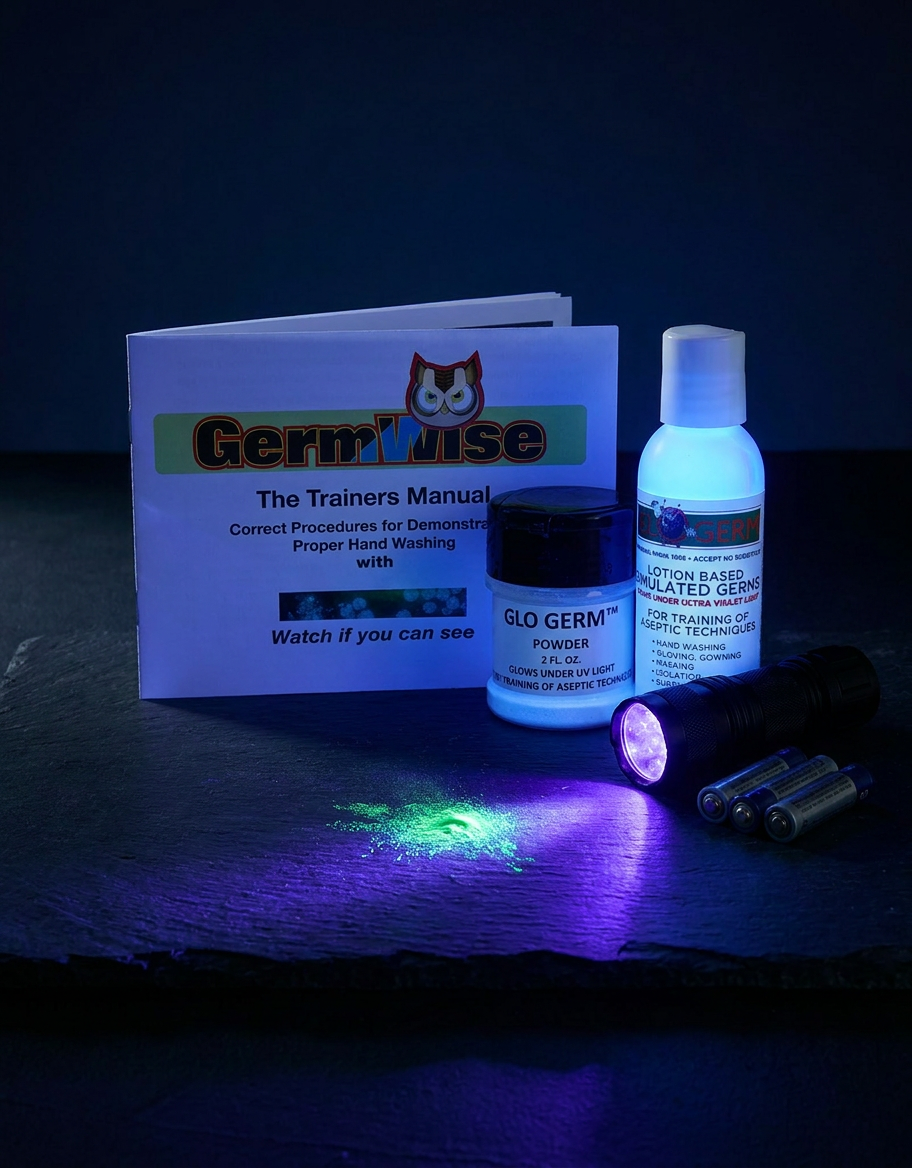
The Premium Mini Kit is specifically designed for classroom use. It includes a 2 oz bottle of GloGerm Gel (enough for 30+ students), a UV flashlight, and a trainer's manual with lesson plans. For larger schools or multiple classrooms, consider ordering in bulk.
Download our free school worksheets to pair with any of these activities. They include handwashing technique guides, observation recording sheets, and colouring pages for younger students.
Tips from Experienced Teachers
- Run the demonstration at the beginning of the school year to establish handwashing habits early
- Repeat the UV check midway through the year — students are always surprised at how their technique has slipped
- Send a note home to parents explaining the activity. Many families will reinforce the lesson at home
- Use the Glo Box if your classroom has bright overhead lighting — it lets each student check their hands without darkening the room
Everything you need for classroom hygiene education
The Premium Mini Kit includes GloGerm, a UV light, and lesson plans — all in one portable package.